
Watering properly in summer
On hot days a bed loses up to five litres of water per square metre through evaporation. Yet frequent, shallow watering is the wrong strategy: the water only reaches the top layer of soil, the plants form shallow roots and become even more sensitive to drought. Rare, penetrating watering is better, as it draws the roots deeper.
up to 5 l/m²
evaporation per day
20 l/m²
per watering
2 ×
per week is enough
The most important rules
- Water early in the morning while the soil is cool – that is when the least evaporates
- Directly at the roots, not over the leaves – wet foliage encourages fungal diseases
- Rather twice a week thoroughly than a little every day
- Mulch: grass clippings or straw keep moisture in the soil
- Rainwater is soft and at ambient temperature – ideal for all plants
How much water do which plants need?
| Plants | Requirement | Note |
|---|---|---|
| Tomatoes, cucumbers | high | evenly, otherwise the fruit splits |
| Container plants | very high | often daily in high summer |
| Lawn | medium | 15–20 l/m² once or twice a week |
| Lavender, rosemary | low | avoid waterlogging |
Measure instead of guessing
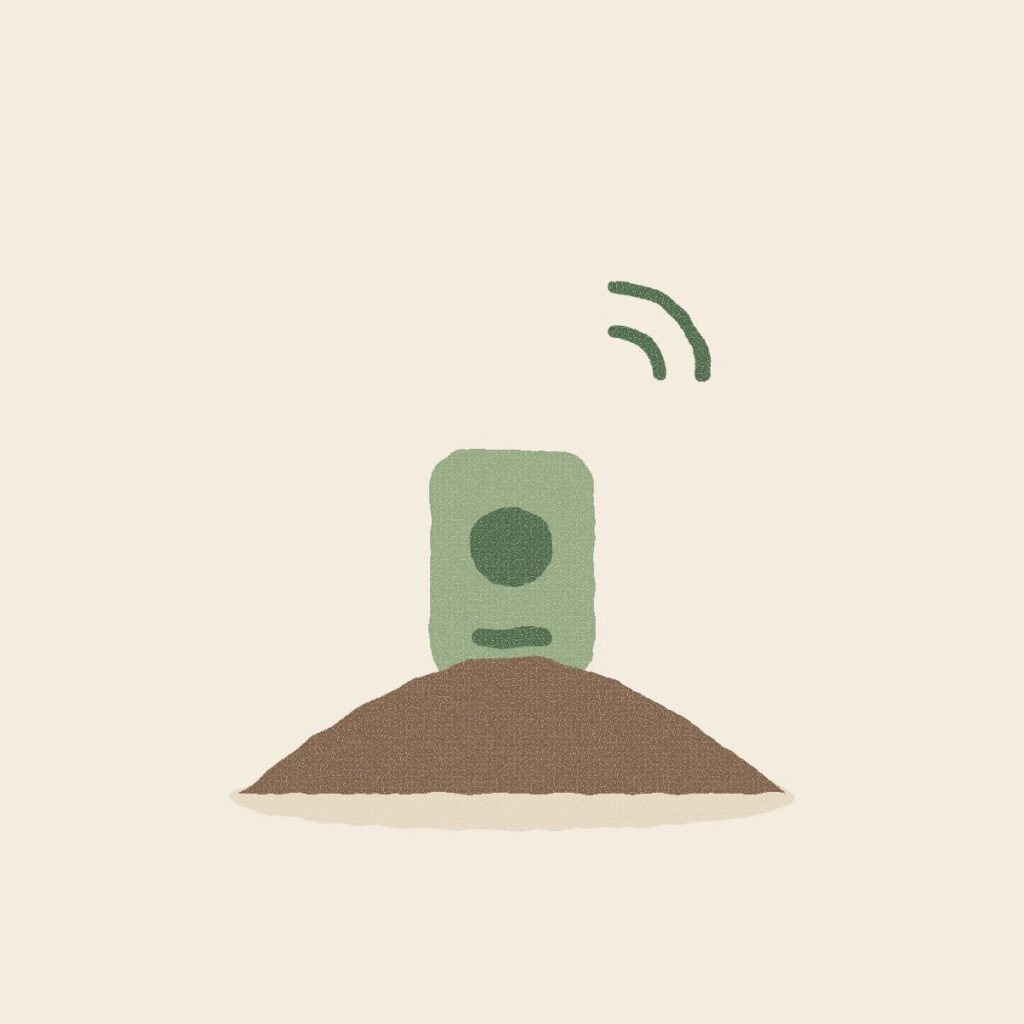
The soil can be bone-dry on top while there is still enough water 10 cm down – or the other way round. A soil moisture sensor measures exactly there and reports via app when it is really time to water.
Container plants dry out faster than bedding plants: the sun heats up the pot, and the roots cannot escape to deeper layers.
Watering while on holiday
For one to two weeks away, simple measures are enough: move containers into the shade, stand them in saucers of water and group them close together. Clay cones with a water bottle reliably supply individual pots.
For the daily watering round



In an emergency, yes – leaves burnt by water droplets are a myth. But a lot of water evaporates unused.
Not in principle, but it encourages slugs and fungi because the foliage stays damp overnight.
