Building a raised bed: the right layers
The secret of a productive raised bed lies inside. As the lower layers slowly decompose they release warmth and nutrients – so plants start the season two to three weeks earlier and grow stronger. It is also kind to your back.
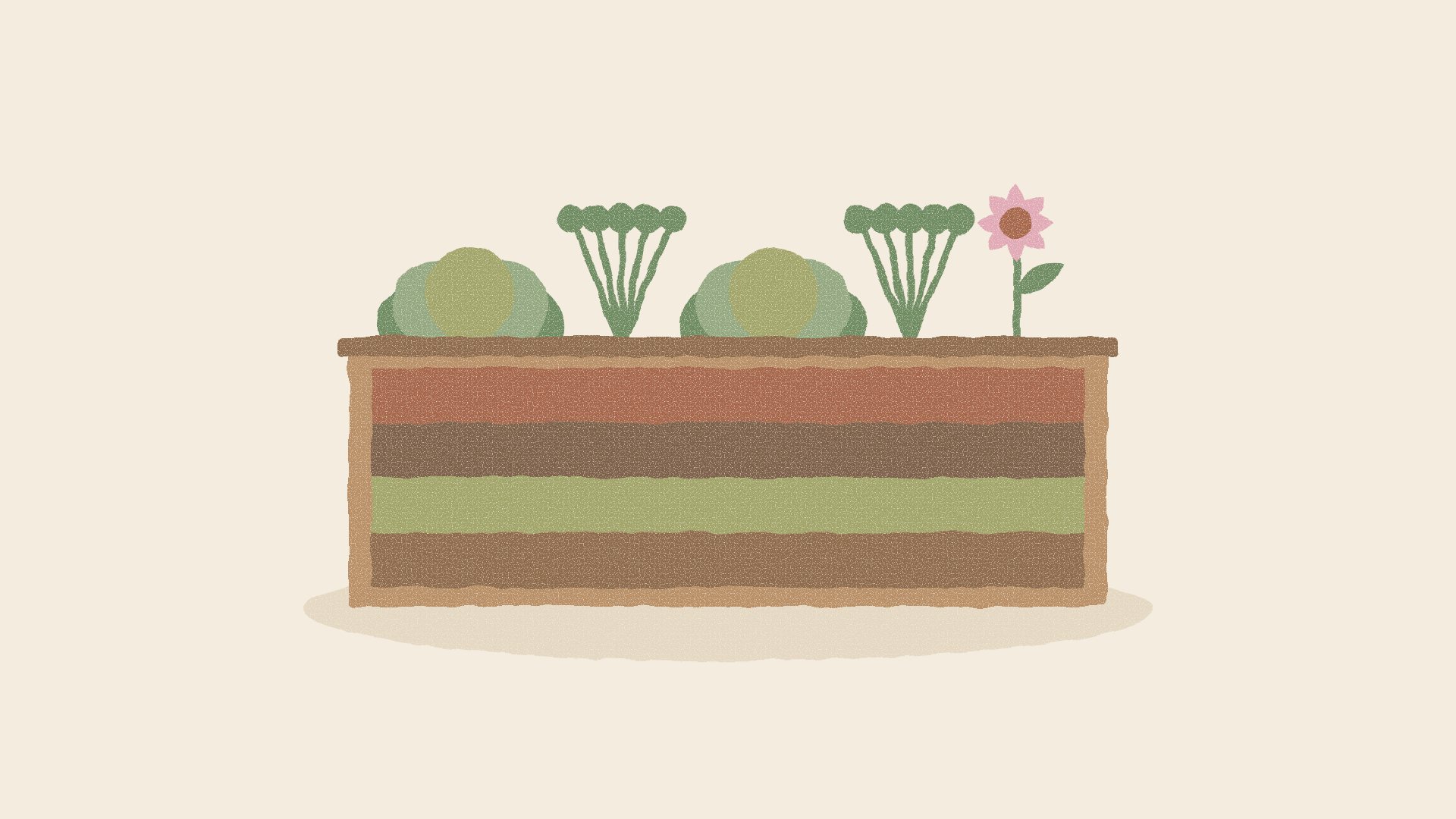
The layers from bottom to top
- Vole mesh on the ground, pulled up the sides
- 30 cm of coarse shrub cuttings and branches
- 20 cm of leaves, upturned turf or straw
- 20 cm of half-mature compost or manure
- 20–30 cm of high-quality potting soil

For the top layer, a peat-free soil such as the organic herb and vegetable soil. The filling settles by 10–20 cm in the first year and is topped up with compost and soil every spring.
How much material do I need?
| Raised bed | Volume | Potting soil | Compost |
|---|---|---|---|
| 100 × 50 × 80 cm | 400 l | 100–150 l | 100 l |
| 150 × 80 × 80 cm | 960 l | 240–360 l | 240 l |
| 200 × 100 × 80 cm | 1,600 l | 400–600 l | 400 l |
Planting in the first year
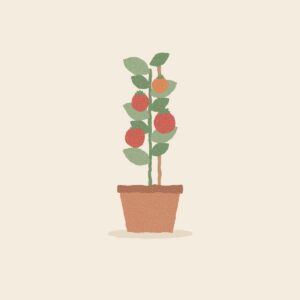
Freshly filled, the raised bed contains a great many nutrients. Heavy feeders such as tomatoes, courgettes, cabbage and pumpkin are ideal now. Lettuce and spinach would store nitrate at this stage and belong in the bed only from the second or third year.
| Year | Nutrients | Suitable plants |
|---|---|---|
| 1 | very high | tomato, courgette, cabbage, pumpkin |
| 2 | high | carrot, leek, onion, chard |
| 3 | medium | lettuce, spinach, beans, radish |
| 4 | low | herbs, peas – then refill |
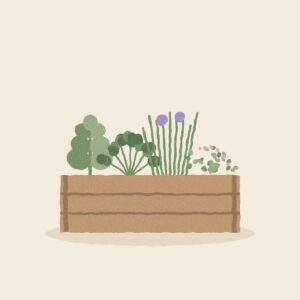
Herbs such as thyme and chives fit along the edge – it is drier there, and their scent keeps some pests away.
If you would rather not plan it yourself, the bed sets offer ready-made combinations with a planting plan.